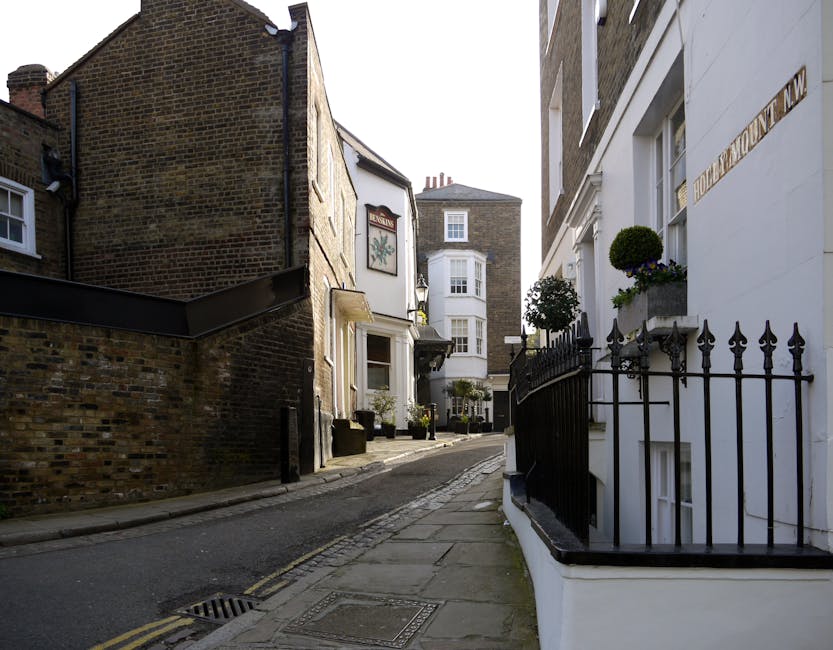
Camden Council removal permits Hampstead rules explained
Posted on 08/07/2026
If you are planning a move in Hampstead, the permit question can sneak up on you. One minute you are comparing van sizes and box counts, the next you are wondering whether Camden Council expects a parking suspension, a bay booking, or some other kind of permission before the movers arrive. This guide gives you Camden Council removal permits Hampstead rules explained in plain English, with the practical bits first and the bureaucracy kept to a minimum.
To be fair, this is one of those topics that sounds more complicated than it often is. But "often" is doing some work there. In central and inner London, a badly planned loading bay, a suspended parking space, or a busy street can turn a straightforward removal into a very expensive headache. The good news? If you understand the moving parts early, you can avoid the usual last-minute scramble, protect your timing, and make the day run much more smoothly.
Below, you will find how the rules usually work, who needs to think about permits, what can go wrong, and how to plan a Hampstead move without feeling like you are battling a maze of forms. If you are also lining up packing, storage, or a vehicle, you may find it useful to look at the full range of removal services and, if you need help with the actual move itself, a man and van service in Hampstead can be a practical starting point.
Why Camden Council removal permits Hampstead rules explained Matters
Hampstead moves can look simple on paper. In reality, the streets, parking restrictions, permit zones, and resident bay layouts can make a huge difference to how long your move takes. A van that cannot stop close enough to the property means more carrying, more time, more labour, and often more stress. And in Hampstead, where roads can be tight and parking can be unforgiving, that matters a lot.
One of the biggest reasons people search for Camden Council removal permits Hampstead rules explained is this: they want to avoid turning moving day into a parking dispute. Nobody wants to discover, half an hour before the van arrives, that the only available space is shared with someone's permit bay or that the loading window is already gone. It happens. More often than people expect.
There is also the timing angle. A removal permit or parking suspension, where needed, is not something you want to sort out on the morning of the move. Even when everything is perfectly legitimate, administrative lead times can still trip you up. That is why the topic matters whether you are moving a studio flat near Hampstead Heath, a family house with awkward access, or a small office move that needs a clear loading point.
If you are trying to keep the day efficient, it helps to think about the move as a sequence: access, parking, loading, carrying, transport, unloading. If any one of those breaks down, the whole thing slows. Simple as that.
How Camden Council removal permits Hampstead rules explained Works
Let's keep this straightforward. In many London boroughs, moving a vehicle for removal purposes can involve one or more of the following: permission to use a parking bay, a temporary suspension of a parking bay, or specific loading and unloading arrangements. The exact requirement depends on the street, the time, and whether the van can legally stop there without causing a restriction issue.
For Hampstead specifically, the important thing is not to guess. Streets vary wildly. One road may have enough space for a short load. The next may be lined with permit holders, yellow lines, or limited waiting restrictions. So the practical question is not "Do I need a permit every time?" but rather "What is the exact stopping arrangement for this address and this time slot?"
That is the core of Camden Council removal permits Hampstead rules explained: you are usually dealing with access and parking control, not some dramatic special licence for moving house. But the detail matters. A smaller vehicle may squeeze into a tighter space, while a larger removal van may need a more deliberate parking plan. If you want to compare vehicle types and service styles before booking, our pages on removal van options and man with van support can help you think through the logistics.
There is also the difference between a permit and a practical arrangement. Sometimes the best plan is not a formal parking suspension at all, but simply arranging a legal loading spot nearby, with enough time allowed for the crew. In other cases, especially on busier Hampstead streets, a more formal arrangement may be the safer route.
Practical summary: If your van cannot legally and safely stop close to the property, the move slows down fast. The permit question is really an access question dressed up in council language.
A useful way to think about it
- Short, light move: May only need legal loading space and careful timing.
- Busy street or controlled bay: May need parking control or a temporary suspension.
- Large household move: Usually benefits from a more formal parking plan.
- Office or specialist move: Often needs precise vehicle positioning and extra coordination.
Key Benefits and Practical Advantages
Sorting the parking side properly gives you more than just compliance. It makes the day feel calmer, and that is not a small thing when boxes are everywhere and someone has misplaced the kettle again.
1. Faster loading and unloading
The closer the van can get to the entrance, the quicker everything moves. That reduces carrying distance, saves energy, and lowers the risk of delays. In narrow parts of Hampstead, this is often the single biggest efficiency gain.
2. Lower stress for everyone involved
When the access plan is clear, the driver can focus on the move instead of circling for parking. You can focus on the keys, the inventory, the pets, the final meter readings, and the usual moving-day chaos.
3. Better protection for your belongings
Longer carry distances increase the chance of knocks and slips, especially with furniture or fragile pieces. A sensible parking setup supports smoother handling. If you are moving awkward items, the right support really matters; for example, furniture removals in Hampstead and piano removals need more than just a van and hope.
4. Fewer avoidable costs
Time is money during removals. Extra waiting, repeated trips, or an inability to park near the property can all drive the price up. If you want a clearer sense of the cost side, it is worth reading about NW3 removals costs and quotes before you book.
5. A more professional move overall
There is a noticeable difference between a move that has been planned properly and one that is winged. You will notice it in the tone of the day, the pace, and even the mood of the people helping. One runs like a sequence. The other runs like a shrug.
Who This Is For and When It Makes Sense
This topic matters for more people than you might think. It is not only for people moving from one large family home to another. In fact, some of the trickiest situations are the smaller ones, because there is less room for error.
- Flat movers: Especially if the building is on a narrow road or has no private driveway.
- House movers: Particularly where the property fronts directly onto a controlled street.
- Students: You may be moving with a small van, but access can still be awkward. See also student removals in Hampstead.
- Office movers: Office collections usually need tight timekeeping and a good curbside plan. Office removals in Hampstead are rarely a "turn up and hope" job.
- People with large or fragile items: Pianos, antiques, artwork, mirrors, or bulky furniture all benefit from closer access.
- Last-minute movers: If the move is urgent, you need to know what can be done quickly and what cannot. Our guide to same-day removals in Hampstead is useful here.
It also makes sense if you are moving during a busy time of day, on a weekend with heavy street parking, or at a property with awkward stairs and a long internal walk from the nearest legal stopping point. Basically, the more access challenges you have, the more the permit conversation becomes part of the move itself.
Step-by-Step Guidance
If you want Camden Council removal permits Hampstead rules explained in practical terms, this is the part to pay closest attention to. The process is mostly about planning rather than paperwork wizardry.
- Check the exact address and street conditions. Look at whether the property sits on a single yellow line, in a permit bay, on a controlled road, or near a loading restriction. Do not assume the same rules apply to the whole neighbourhood.
- Decide what kind of vehicle will be used. A smaller van may fit more easily, while a larger removal truck may require different access. If you are unsure, compare options early rather than leaving it to chance.
- Estimate how long loading will take. This is where many moves go wrong. People estimate the "obvious" items and forget the awkward ones: mirrors, bed frames, stairs, bins, plants, or the three boxes that contain everything you still need that morning.
- Ask whether a formal permit or parking suspension is needed. This depends on the street and the stopping arrangement. If the vehicle can legally stop without obstructing or breaching restrictions, the answer may be simpler than expected.
- Build lead time into your booking. Even a simple setup is easier when you are not arranging it at the last minute. Give yourself breathing room. You will thank yourself later.
- Confirm the access plan with the movers. Tell them about narrow entrances, steps, resident bays, access codes, or lift restrictions. Good movers can adapt, but only if they know the real conditions.
- Keep contact details and timing aligned. On moving day, one confusing message can cause a chain reaction. Make sure the driver, organiser, and any building contact are on the same page.
If there is one thing to remember, it is this: moving is already a timing-sensitive task. Parking issues add friction. Plan for them early, and the whole job becomes less dramatic.
Expert Tips for Better Results
Over the years, one pattern shows up again and again: the best moves are rarely the most glamorous ones, just the ones that were thought through properly.
Book the access plan before the panic starts
If you know your street is tight, treat the permit question as part of your booking checklist. Not a later job. Not a "we'll sort it on the day" job. That approach tends to backfire.
Use smaller vehicles where access is awkward
Sometimes a compact van is simply the smarter move. It may reduce the need for complicated parking arrangements and make the loading process easier. This is especially true on busy Hampstead roads where space is at a premium.
Match the service to the property
A flat move, a family house move, and an office relocation are not the same thing. They may all involve boxes and furniture, but the access pressures are different. For a more tailored choice, look at flat removals, house removals, or general removal services depending on the job.
Think about the building as well as the street
Some jobs go wrong not because of the road, but because of the entrance. Narrow hallways, shared lifts, basement stairs, and awkward intercom systems can all slow things down. If the van is parked a little further away, these internal bottlenecks become more painful.
Keep a backup plan for weather
Rain changes everything. Boxes get slippery, metal rails get colder, and loading takes longer. It sounds obvious, but on a damp Hampstead morning, obvious things need saying. A covered route and extra sheets or wraps can save time and damage.
Use storage if the timing is messy
Occasionally, the permit or access issue is just one part of a larger timing problem. If completion dates do not line up neatly, short-term storage can help. See storage in Hampstead if that sounds familiar.
Small tip, slightly nerdy maybe: if you can avoid having your biggest item arrive last, do it. The final five minutes of a move are where confidence goes to die.
Common Mistakes to Avoid
This is where many otherwise sensible moves go sideways. Not because people are careless, exactly, but because removals are full of little assumptions.
- Assuming Hampstead streets all work the same way. They do not. One street can be surprisingly easy; the next can be a parking puzzle.
- Leaving parking arrangements until the last minute. By then, you are already juggling keys, movers, boxes, and maybe a neighbour asking where to move their bins.
- Choosing a vehicle that is too large for the access. Bigger is not always better. Sometimes it is just bigger.
- Forgetting about building rules. Some blocks have time windows, lift bookings, or access limits that matter just as much as street parking.
- Not telling the mover about restrictions. A driver can only plan around what they know.
- Underestimating loading time. This is the classic one. It looks quick until the wardrobe comes into the picture.
- Ignoring the return journey. If you need the van to come back later, make sure the access plan still works then, not just at the start.
Truth be told, most of these problems are preventable with one calm conversation and a decent checklist. That is all. No magic.
Tools, Resources and Recommendations
You do not need a suitcase full of software to organise a Hampstead move, but a few sensible tools and documents will make things easier.
- Property access notes: Door codes, concierge instructions, stair counts, and any loading restrictions.
- A written inventory: Especially if you have furniture, fragile items, or anything that needs disassembly.
- Measuring tape: Handy for checking whether the van, furniture, or large boxes will fit through the route.
- Box labels: Not glamorous, but extremely useful when you are tired and it is 7:45pm.
- Parking and timing notes: Keep the move start time, estimated loading time, and any access window in one place.
If you are still choosing how to structure the move, the following pages may help you decide what is worth booking: removals in Hampstead, man with a van in Hampstead, and packing and boxes in Hampstead. If you need to understand the broader service range first, the services overview is a sensible place to start.
One very practical recommendation: keep your permit or parking plan in the same folder as your completion paperwork, keys, and inventory. Less searching. Less faff. It sounds small, but on moving day those small things add up.
Law, Compliance, Standards, or Best Practice
Because this topic touches parking control and road use, it is best to be careful and precise. The exact requirements can vary by street, vehicle type, time of day, and local restrictions. So while general moving advice can be useful, the final decision should always be based on the actual location and arrangement for the day.
Best practice is to treat local parking and access rules as part of the move plan, not as a separate administrative issue. That means:
- checking the street conditions before booking
- allowing time for any permission or suspension process that may be needed
- making sure the mover understands the location-specific restrictions
- avoiding illegal stopping or unsafe unloading
- keeping the move within sensible working and access windows
In practical terms, compliance is mostly about planning ahead and not gambling on a space appearing at the last second. If a move needs a formal arrangement, it should be in place before the van arrives. If it does not, you still need a legal, safe stopping plan. That is the cleanest way to think about it.
Insurance and safety also matter here. A poorly parked van can create a chain of risks: more carrying distance, more handling, more chance of injury, and more chance of accidental damage. For a closer look at how a professional team approaches this, see insurance and safety and health and safety policy.
Options, Methods, or Comparison Table
Below is a simple comparison of the most common approaches people consider when planning a Hampstead move. The best option depends on the street, the size of the move, and how much access pressure you are dealing with.
| Approach | Best for | Pros | Trade-offs |
|---|---|---|---|
| Legal kerbside loading without a formal permit | Shorter moves, quieter streets, flexible timing | Simple, quick, often cost-effective | Only works where stopping is genuinely allowed |
| Parking bay suspension or controlled space | Busy roads, restricted bays, larger removals | Closer access, more predictable timing | May require advance arrangement and planning |
| Smaller vehicle with flexible access | Flat moves, narrow streets, limited stopping space | Easier to position, less parking pressure | May need more than one trip for larger loads |
| Storage plus staged move | Staggered completion dates, downsizing, delayed access | Reduces time pressure and avoids rushed decisions | Adds an extra step to the move |
If you are comparing methods, do not just think about price. Think about time, carrying distance, and how the day will actually feel when the clock starts ticking. The cheapest option is not always the least stressful one. Not by a long chalk.
Case Study or Real-World Example
Picture a typical Hampstead flat move on a narrow residential street. The household has a sofa, a bed, a dining table, several boxes of books, and a couple of awkward lamps. Nothing extraordinary. But the street has limited stopping space, and the building entrance is several metres from the nearest practical loading point.
In that situation, the obvious mistake would be to assume the van can just stop "for a minute." A minute becomes ten. Ten becomes a warning. Then someone starts carrying boxes further than they should, in a little drizzle, with a line of traffic waiting behind them. It is not dramatic. It is just annoying. And avoidable.
The better approach is simple: identify the likely stopping point before the move, check whether any formal arrangement is needed, and choose a van size that suits the road as well as the furniture. If the family also needs help with disassembly and careful handling, the move becomes much easier with furniture removals support rather than trying to improvise everything on the day.
Another common example is a small office move near Hampstead where timing matters more than volume. In that case, access planning can be even more important than the total number of items. A short window, a controlled street, and a strict handover time mean the van needs to be positioned well, not just driven well. A tidy parking plan saves real time there.
That is the pattern, really. The move itself may be ordinary. The access plan is what decides whether it feels ordinary.
Practical Checklist
Use this before moving day. It is the kind of list that saves you from silly stress later.
- Confirm the exact moving address and street layout.
- Check whether the vehicle can legally stop where you need it to.
- Decide if a permit, suspension, or other parking arrangement may be needed.
- Choose the right vehicle size for the road and load.
- Tell the mover about stairs, lifts, codes, narrow entrances, and time windows.
- Prepare a clear inventory of furniture and boxes.
- Pack awkward or fragile items separately and label them clearly.
- Keep keys, documents, and access instructions together.
- Build a buffer into your timing in case the street is busy.
- Have a backup plan if parking becomes tighter than expected.
If you tick those off, you are already ahead of most moving-day disasters. Honestly, that alone cuts a lot of noise.
Conclusion
Camden Council removal permits Hampstead rules explained boils down to one practical idea: good access planning makes the move easier, safer, and usually cheaper in the end. Whether you need a formal parking arrangement or simply a sensible loading strategy, the key is to think ahead, not react on the day.
In Hampstead, where streets can be tight and timing can be unforgiving, even a small access decision can shape the whole moving experience. Get the parking side right, and everything else tends to feel more manageable. The boxes move faster. The crew stays calmer. You breathe a little easier. And that matters more than people sometimes admit.
If you are mapping out your move and want help with the practical side, from the van itself to packing, access, or storage, exploring the relevant pages on this site is a good next step. One careful plan now can save a lot of noise later.
Get a free quote today and see how much you can save.